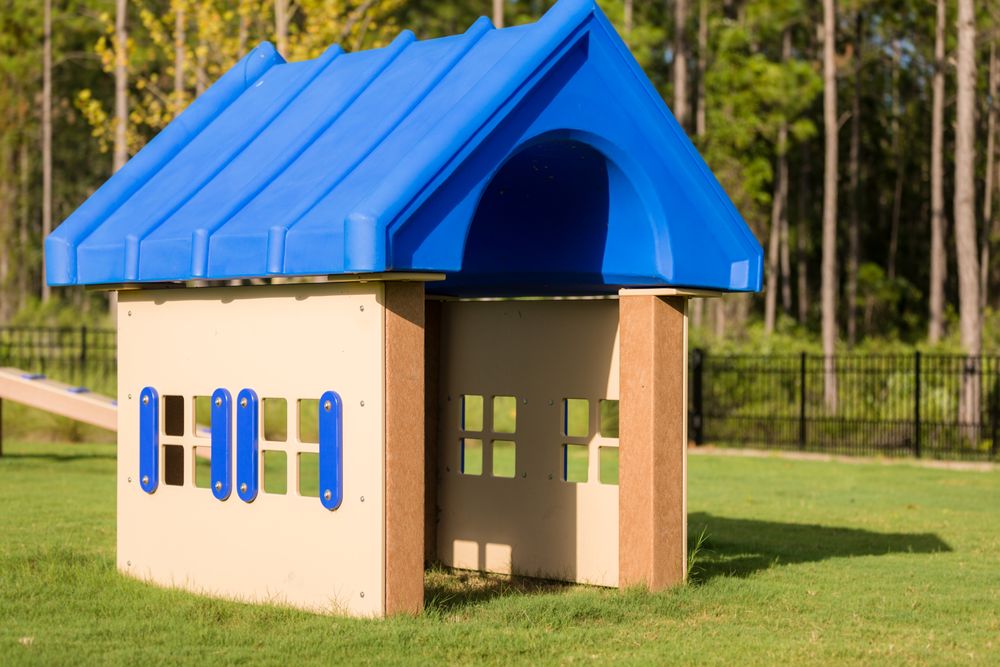
Whether you manage a school district, a city park, or an HOA, knowing what happens at each stage helps you plan your budget, timeline, and approvals.

A commercial playground installation typically moves through six steps: project management, design, estimating, site work and concrete, equipment and surfacing installation, and close-out.
Below, we break down each step, what to ask your playground contractor, and how Zoom Recreation handles the process for projects across California and Arizona.
Why does a playground project need a dedicated project manager? A playground build involves design, budgeting, site work, equipment, surfacing, and paperwork. A single project manager (PM) keeps those pieces connected so details don't get lost between phases.
A good PM learns your site, goals, and budget before design begins. They coordinate with designers and estimators, answer questions, present options, and refine the proposal. They should also stay involved through installation and close-out.
What to ask your contractor: Will I have one point of contact for the whole project, and how do I reach them?
How Zoom handles it: Every Zoom project is assigned a dedicated local PM who acts as the quarterback of the project team. You can call or text your PM anytime, and they stay with the project from first conversation through close-out.
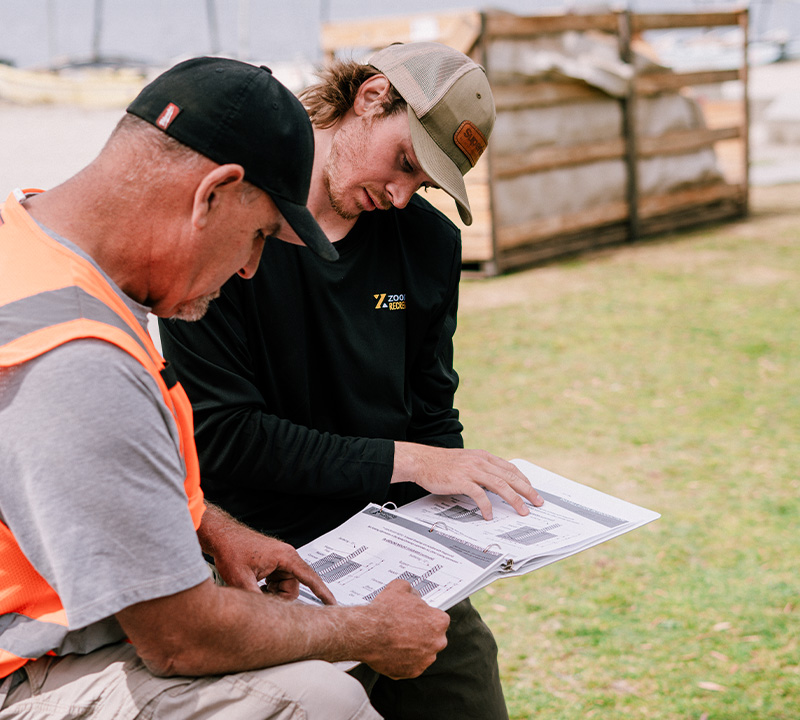
What happens during the playground design phase? A designer creates site plans and renderings that show equipment layout, surfacing areas, pathways, and shade. The plans must account for safety and accessibility requirements before construction starts.
Key design considerations include:
What to ask your contractor: Is design done in-house, and will drawings be pdated if the scope changes?
How Zoom handles it: Zoom's in-house Senior CAD Designer, Erwin Sosa, develops project plans and renderings for every project. Drawings are updated as the project evolves, so your team and the installation crew always work from the same plan. Learn more about our custom playground surfacing designs.

How is the cost of a commercial playground estimated? Once the scope is set, an estimator performs a takeoff: a detailed calculation of the materials and labor the project needs. A thorough takeoff usually covers:
Material sourcing and labor structure both affect your final price. Contractors who use subcontractors typically add markup for that work, while contractors with in-house crews can avoid it.
What to ask your contractor: Who performs the installation, and how are material prices sourced?
How Zoom handles it: Zoom's estimating department works with the major ready-mix suppliers in California and collects bids from multiple local material suppliers. Because installation crews are in-house, there is no subcontractor markup on the estimate.
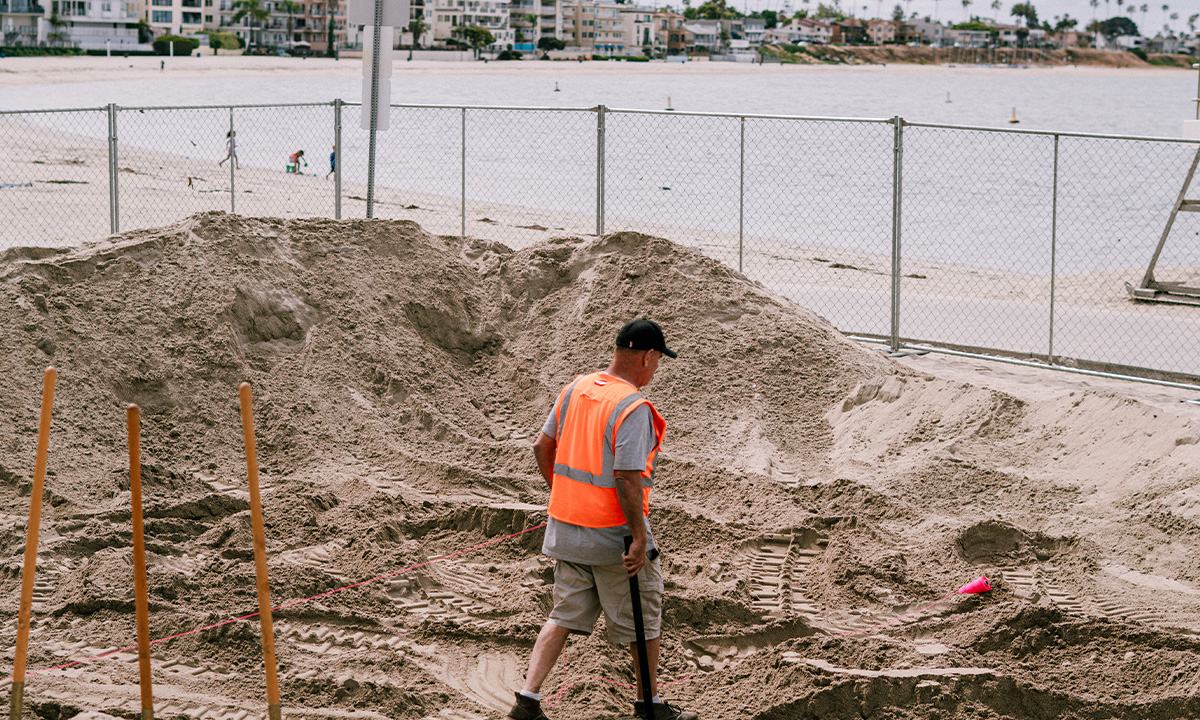
What site work is needed before playground equipment goes in? Most installations start with excavation, grading, and removal of soil spoils. Concrete work follows, including footings and the hardscape that connects the playground to the rest of the site.
Common site concrete elements include:
When one company handles both site work and installation, scheduling is simpler and there are fewer handoffs between trades.
What to ask your contractor: Do you self-perform concrete and site work, or is it subcontracted?
How Zoom handles it: Zoom's site concrete division, led by Senior PM Daniel Castilon, handles sidewalks, ADA pathways and ramps, curbs, gutters, and architectural hardscape. Scheduling is coordinated across every trade in-house.

What type of surfacing goes under a commercial playground? Playground safety surfacing cushions falls within the equipment's use zone. Pour-in-place rubber is a common choice for schools, parks, and HOAs because it is durable, low-maintenance, and supports accessible routes.
When comparing surfacing, look for products that are IPEMA Certified, which means they have been independently tested to applicable safety standards.
What to ask your contractor: Do your own crews install the equipment and surfacing, and is the surfacing IPEMA Certified?
How Zoom handles it: Zoom staffs its own installation crews, so you work with one company from design through completion. Zoom also provides and installs its own pour-in-place rubber surfacing, ZoomIMPACT, an IPEMA Certified product used by school districts, parks, and HOAs across California and Arizona. 10 common questions about commercial playground installation.
What does playground project close-out involve? Close-out is the final paperwork phase: documentation, billing, and handoff. For public agencies and school districts, billing and documentation often need to follow specific contract or cooperative purchasing requirements.
A smooth close-out depends on the contractor understanding your contract before work begins, not at the end.
What to ask your contractor: How do you handle documentation and billing requirements for our type of contract?
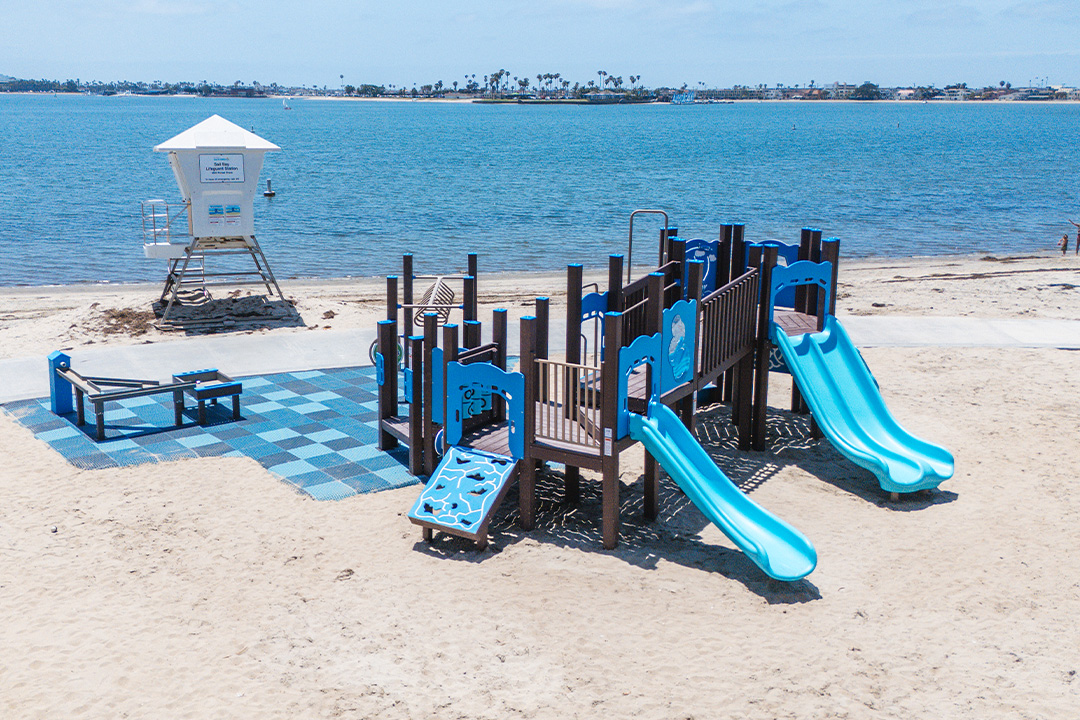
How Zoom handles it: Zoom's back office reviews each contract before work starts so the correct procedures are followed the first time. Documentation stays organized throughout the project, and billing is matched to the requirements of your agreement. The goal is complete paperwork, no last-minute surprises, and a clean handoff. Explore our finished commercial playground projects.
How long does a commercial playground installation take? Timelines depend on project size, site conditions, design approvals, and equipment lead times. Ask your contractor for a schedule that covers each phase, not just the on-site install.
What is a playground use zone? A use zone is the clear area around play equipment where a child could fall or exit the equipment. It must be kept free of obstacles and covered with protective surfacing.
What does IPEMA Certified mean? IPEMA Certified products have been independently tested to confirm they meet applicable safety standards for public play equipment or surfacing.
Why hire a playground contractor that self-performs installation? Self-performing contractors manage their own crews, which means fewer handoffs, more direct scheduling control, and no subcontractor markup.
Can school districts buy playground equipment through a cooperative contract? Many public agencies use cooperative purchasing contracts to streamline procurement. Zoom Recreation holds a Mohave Educational Services Cooperative contract for shade structures.
Who installs commercial playgrounds in California and Arizona? Zoom Recreation designs, estimates, and installs commercial playgrounds, shade structures, and site amenities for schools, parks, and HOAs across California and Arizona.

Zoom Recreation strives to create efficient recreational spaces and provide exceptional customer service. Superior awarded us their highest President's Award and Gold Club Awards two years in a row.
Contact usAs the exclusive representative of Superior Recreational Products in your local area, Zoom is committed to recommending, providing and installing only the top products for all our customers.